

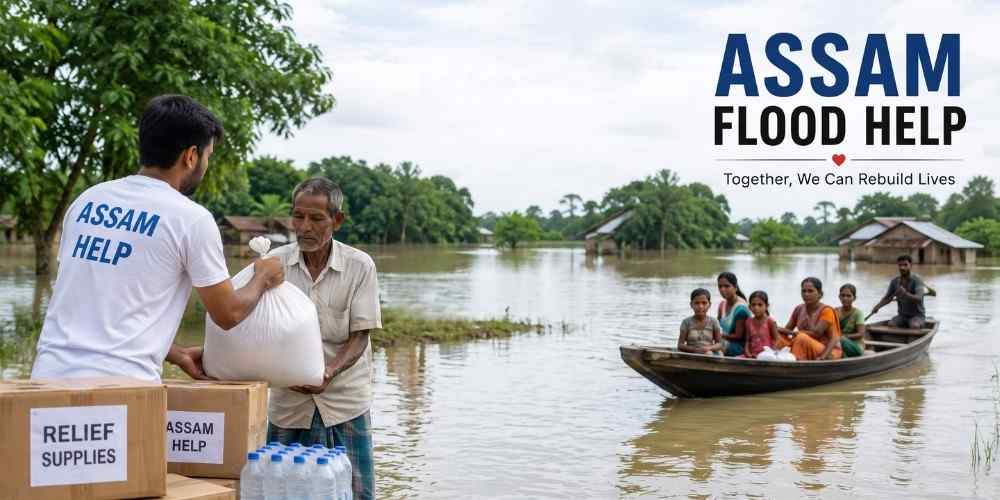
Assam is facing one of its worst monsoon disasters in years. As of late July 2026, the flood toll has climbed to 80 lives lost, with the Assam State Disaster Management Authority placing the affected population at over 2.1 lakh people though cumulative figures reported across the flood season put the total affected closer to 10 lakh people at the crisis’s peak. The emergency spans 437 villages across 21 revenue circles in eight districts, with agricultural land, homes and infrastructure submerged under floodwater.
Assam Floods 2026: Key Facts at a Glance
| Metric | Figure |
| Death toll | 80+ (as of July 31, 2026) |
| People affected | 2.1 lakh (current), 10 lakh+ (season peak) |
| Villages affected | 437 across 21 revenue circles |
| Districts affected | 8 |
| Crop area submerged | 17,198+ hectares |
| Relief camps | 21+ locations |
Which Districts in Assam Are Affected by the 2026 Floods?
The districts currently affected are Golaghat, Sivasagar, Biswanath, Charaideo, Kamrup Metropolitan, Jorhat, Dhemaji and Nagaon. Earlier in the flood season, the crisis also hit Dibrugarh and Lakhimpur, with over 900 villages submerged at the peak of the disaster.
What Caused the Assam Floods in 2026?
The 2026 floods weren’t triggered by a single event but by a sustained spell of extreme rainfall across Assam’s upstream catchments, pushing the Brahmaputra and its tributaries past danger levels. Chronic infrastructure weaknesses have compounded the damage more than 60% of Assam’s flood-control embankments need reconstruction or repair and breaches during heavy rain are described as an almost annual occurrence.
Is climate change making Assam floods worse?
Experts and officials point to both extreme rainfall intensity and inadequate embankment infrastructure as compounding factors, not a single cause. Analysts have noted that much of the 2026 destruction was largely preventable and tied to human and infrastructural factors.
Current Situation: Is the Flood Improving?
Floodwaters had begun receding in several parts of Assam by late July, but the India Meteorological Department warned of heavy to very heavy rainfall over the following days, raising fresh flooding risks in areas only starting to recover. The most recent deaths were reported from Sivasagar district within the last 24 hours of the July 31 update, showing the crisis is still active rather than resolved.
Relief and Rescue Efforts Underway
Government agencies, disaster response teams and civil society organizations are working in parallel:
- Government response: ASDMA coordinated relief camps, evacuation operations and central assessment teams deployed to affected districts.
- Public support: Public figures and foundations have launched relief campaigns, including multi-phase support drives working with local groups to distribute essential supplies to affected families.
- Grassroots/NGO response: Community level organizations remain critical for last-mile relief distributing food, clean water and shelter materials in villages that government convoys reach last.
How You Can Help Assam Flood Victims
- Donate to verified relief organizations working directly in affected districts
- Contribute essential supplies: clean drinking water, dry rations, sanitation kits, medicines
- Support long term rehabilitation not just emergency relief since displaced families need help rebuilding homes and livelihoods after floodwaters recede
- Share verified information to counter misinformation during the crisis
FAQ
How many people have died in the Assam floods 2026?
The death toll stood at 80 as of July 31, 2026, according to the Assam State Disaster Management Authority, with figures rising through the season.
How many districts are affected by the Assam floods 2026?
Eight districts are currently affected: Golaghat, Sivasagar, Biswanath, Charaideo, Kamrup Metropolitan, Jorhat, Dhemaji and Nagaon.
What is causing the Assam floods in 2026?
Sustained extreme rainfall in upstream catchments, combined with weak and poorly maintained embankments, is driving the flooding.
Is the Assam flood situation improving?
Partially floodwaters have receded in some areas, but IMD rain warnings mean fresh flooding remains a risk in the near term.